Quick start
Get an introduction to the Vaccine Champion Program

The Vaccine Champion Program is designed to improve HPV vaccine communication and coverage by engaging healthcare systems’ own vaccine champions while also helping them leverage other quality improvement (QI) resources to increase HPV vaccination rates.
In our cluster randomized trial with 47 primary care clinics, we found that vaccine champions have great potential for improving HPV vaccine communication by leading Announcement Approach Training (AAT) workshops.
The AAT is an ideal way to engage champions because it’s a research-tested intervention that comes with ready-made slides and a script, so champions don’t need to spend time creating materials or protocols. Plus, as a one hour, in-clinic training the AAT won’t take up a lot of champions’ time to implement.
This is a placeholder for vaccination outcomes (if appropriate).
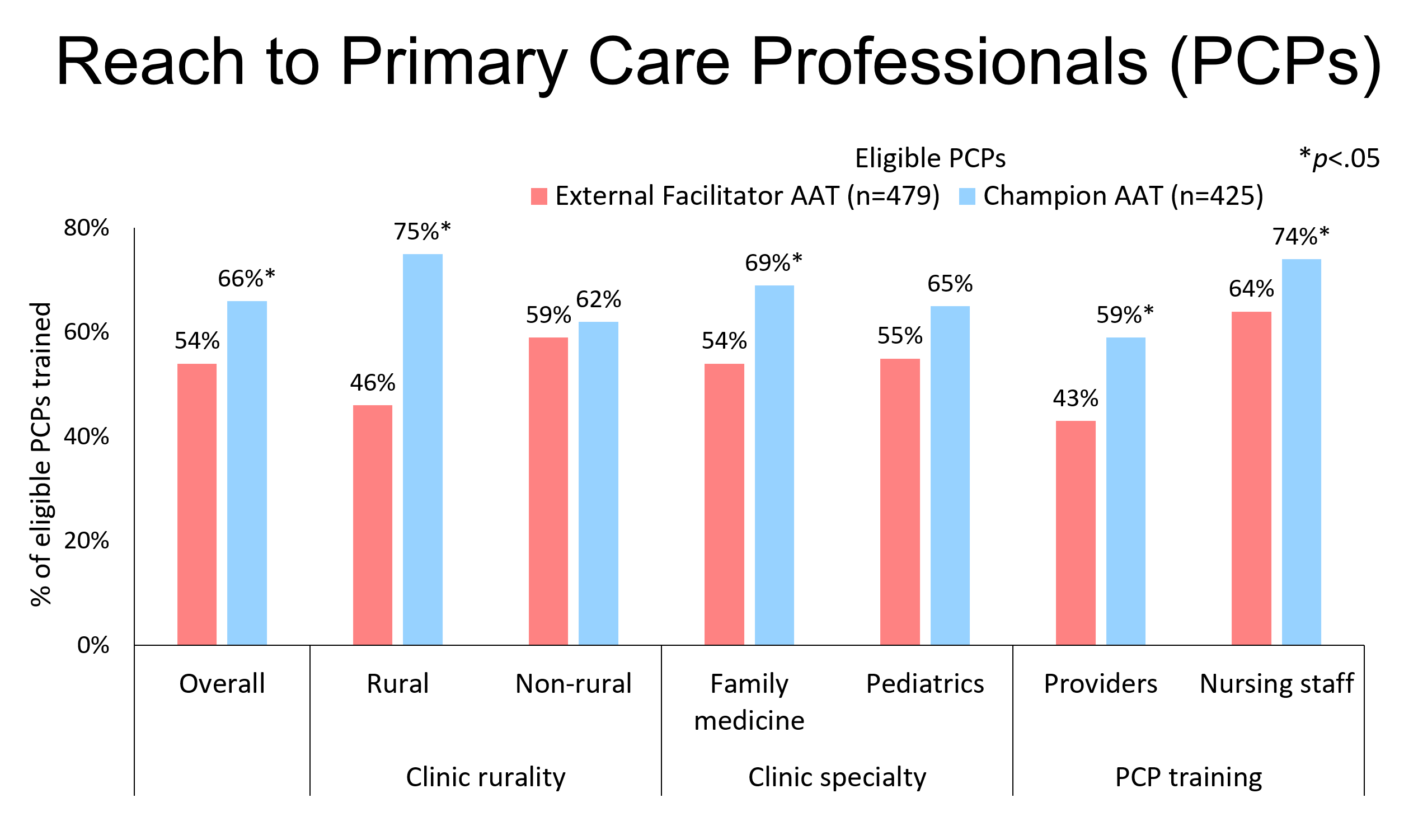
Our research compared the impact of champion facilitators to external expert facilitators when delivering AAT workshops. We found:
The figure below compares vaccine champions to external facilitators on reach to PCPs in AAT workshops. It shows that more eligible PCPs attended AAT workshops when they were led by a champion than when they were led by an external facilitator in almost every category.
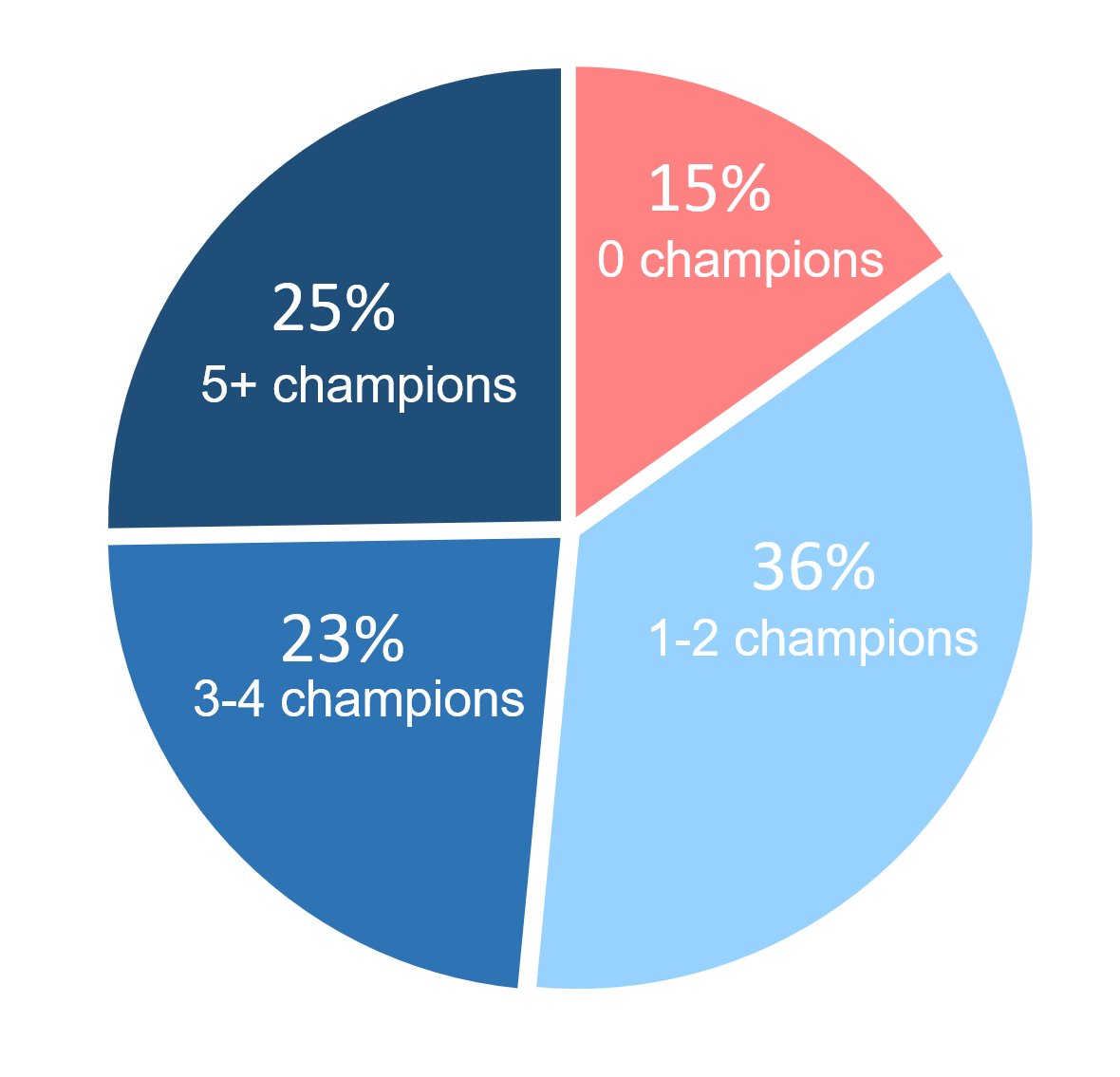
In our national survey of 2,527 primary care professionals with a role in adolescent vaccination, 85% reported that they work with at least one champion.
Read more about this research.
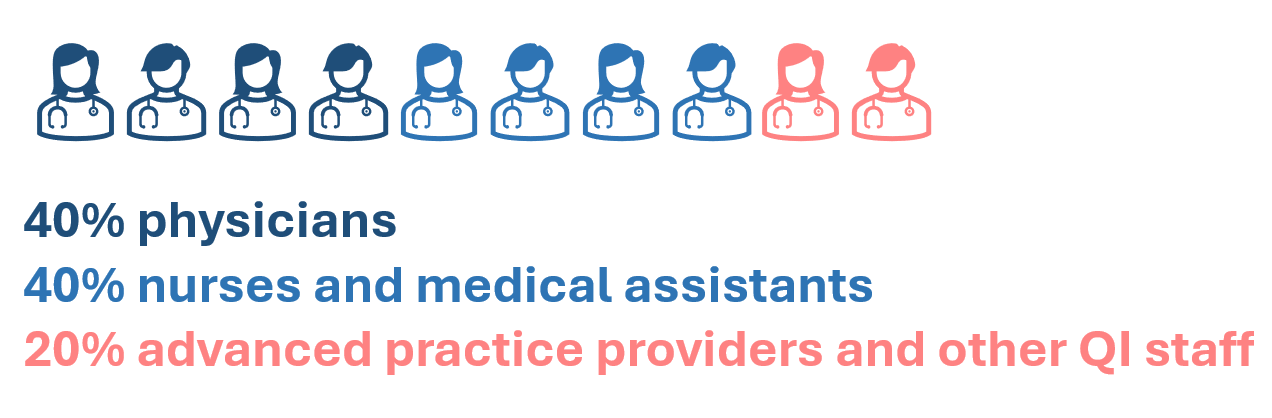
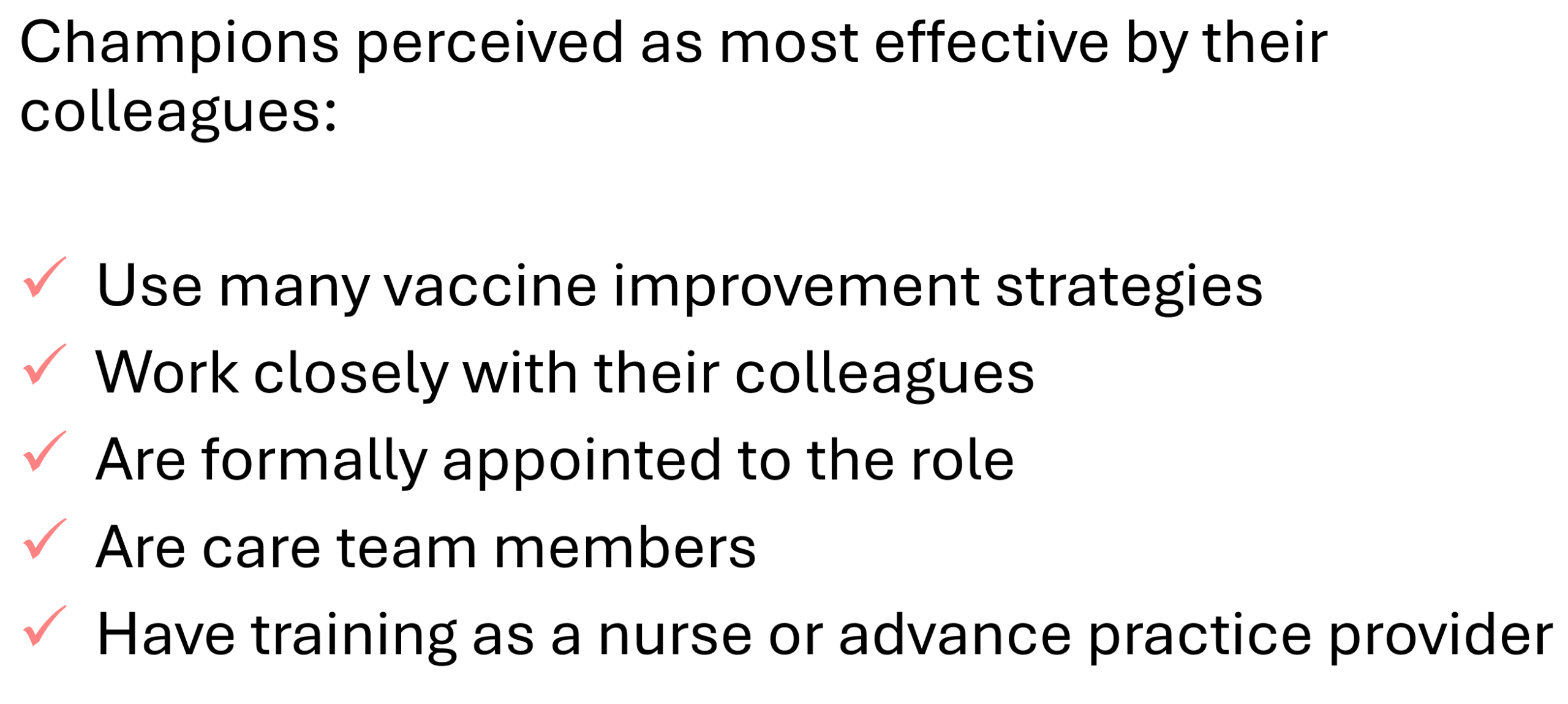
In our survey, primary care professionals reported that the champions they work with most closely have many clinical roles. What’s most important is that they have an interest in quality improvement and a strong relationship with their colleagues.
Read more about this research.
Medical training of people’s closest vaccine champion.
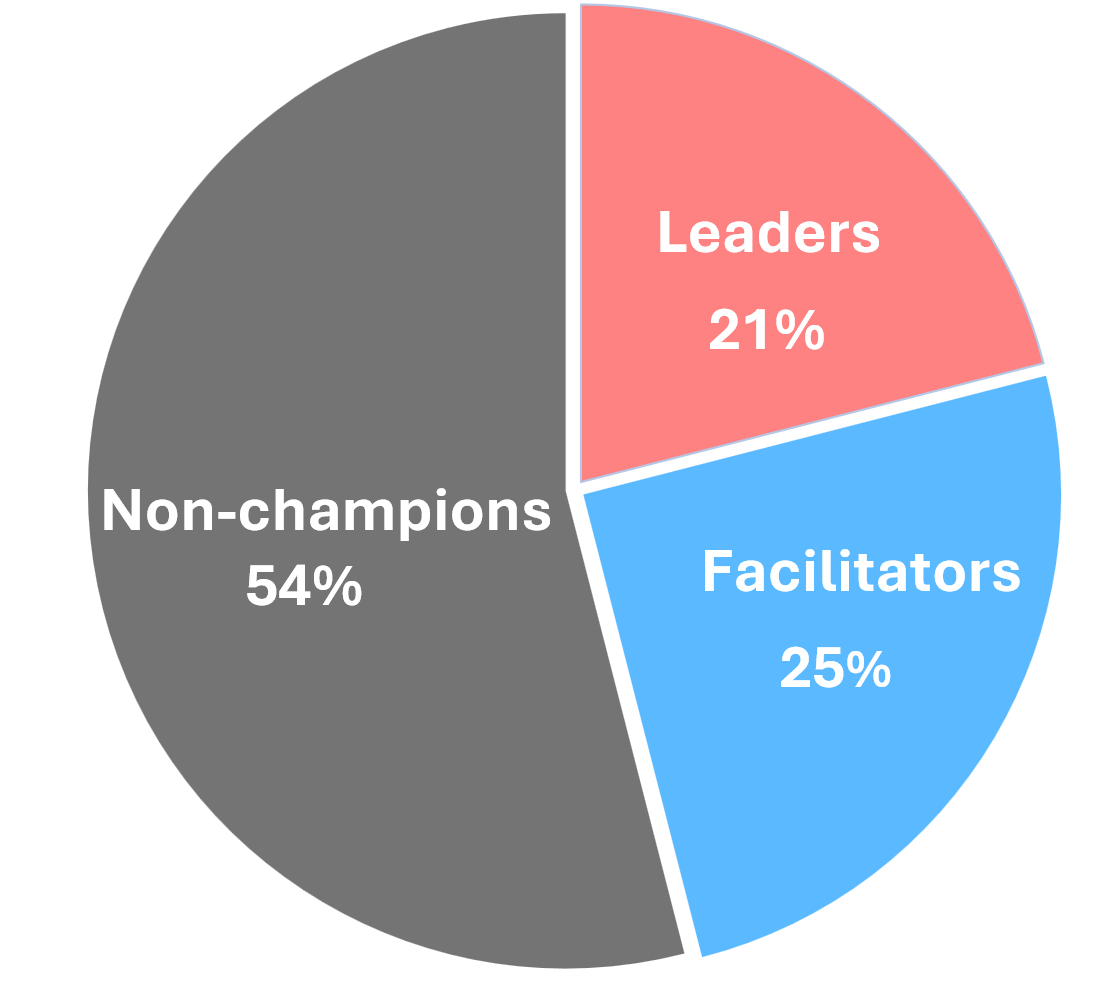
Almost half of primary care professionals in our survey consider themselves vaccine champions. Of self-reported vaccine champions, 21% lead projects to improve vaccination and 25% facilitate improvement by sharing vaccination data, information and encouragement with their colleagues.
Read more about this research.
The most effective champions combine hands-on clinical experience with a strong commitment to improving adolescent vaccination.
Read more about this research.
“It’s people I work with every day, so it wasn’t like a group of strangers.…That, I think, helped make it easy. I think that also helped with respect and listening. [My colleagues] were like ‘We should pay attention. It’s not just somebody coming in and doing it.’” – Vaccine champion
As healthcare system “insiders,” vaccine champions can use their knowledge of the local context to optimize acceptability and participation in QI efforts.
The champion program helps healthcare systems identify and invest in their existing vaccine champions to increase capacity to improve vaccination services.
Unlike external facilitators, vaccine champions remain in their healthcare system to provide continued support.
Vaccine champions often include clinical staff with a range of training. Advanced practice providers, nurses and medical assistants, as well as quality improvement staff and physicians, can be very effective champions.
Get an introduction to the Vaccine Champion Program
See how working with vaccine champions can benefit your healthcare system.
Learn who makes an effective vaccine champion and how to get them ready to work on HPV vaccine QI efforts.
Understand the steps to the Vaccine Champion Program and access the materials to help.
Find out how to sustain the chances for success with the Vaccine Champion Program.